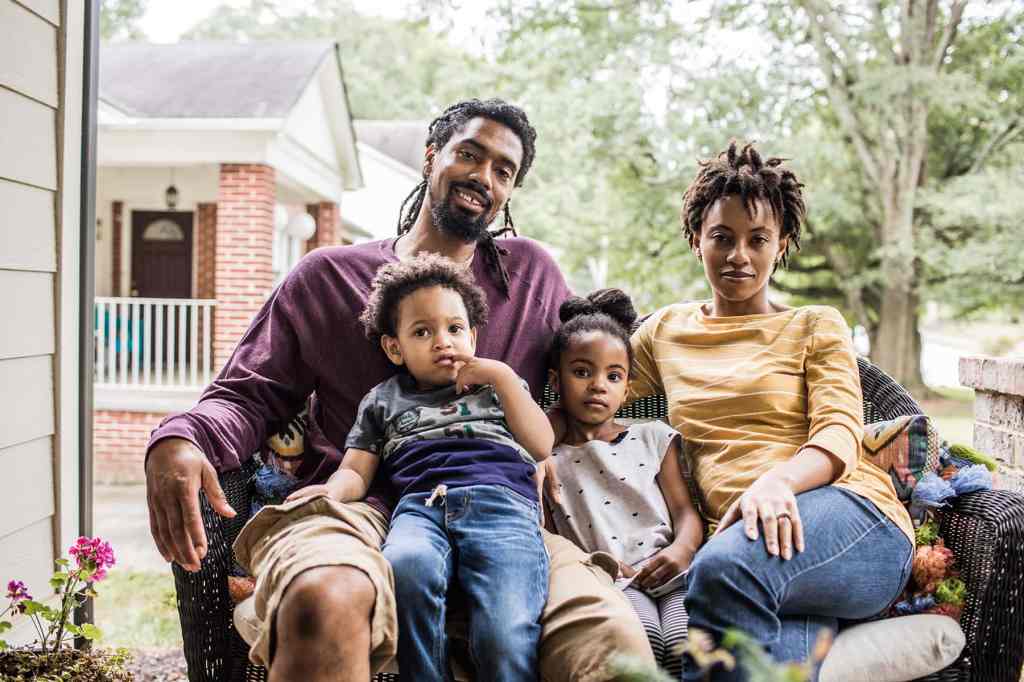
Topic: Rebuilding Black Families and Communities Entry 1
Title: Do we see the Black Family as it Exists or do we Take it for Granted as an Institution? Part 3
Video Inspired By: Why are Black Families Weaker Today than 150 Years Ago (Episode #017)(LINK) https://youtu.be/_IezV8a2vO4
This is a loaded question, but one we must work out steadily in small portions. Firstly, we must ask ourselves, what is meant by “seeing the Black Family”; answering this question will be reserved for this Entry while the latter question, what is meant by “do we take it for Granted as an Institution” will be left for the next entry.
Let me begin not by answering the first question but insisting that we see the Black Family as an institution. Dr. T’Shaka has spoken about the important role our Black Afrikan Family structure played in maintaining our culture, our community and our sanity during the Maafa (for those who don’t know, The Maafa or the Great Tragedy is, in Black Consciousness terms, what our traversion through the Atlantic Slave Trade, Enslavement, Jim Crow and Neocolonialism also known as Neoliberalism – hence to the present day, is called). The Oxford Dictionary defines an Institution as “something having the fixity or importance of a social institution”, I would like to amend and edit this definition because I think it falls short in its explanation. For me an institution can be seen as “something having the fixity and importance to have been codified beyond its natural life or beyond the point when natural decomposition would render it unusable”. Specifically as a social force an institution is “a living social organ composed from many separately maturing Beings or persons, unified by custom, creed, allegiance to purpose, lineage or another designation bequeathed to them by birthright or prodigal earning”. Though both are incomplete and upon more thought may require some adjustment, they perform the task intended. They explain to the layperson reader what an institution is (and yes, you will have to either Google what the word fixity means or look it up in another Oxford Dictionary, preferably one earlier than 1970, the older the better). Building from the first altered definition which I use to establish something the first definition didn’t, how the institution was created (through codification); in the second I specify the social nature in this codification before clarifying even more how this social nature is made static in a given social organ structure through customs, creeds, allegiances to a given purpose, lineage and other designations. Since this entry is about family as an institution, I focused heavily on social organs that would fit neatly into that structure. What are your thoughts on these two definitions?
Now we can return to the original question, what is meant by “seeing the Black Family”? Obviously as a structure we can physically “see” our Black Family, we all had one – in theory anyway – so we know what it is, but then again do we know what it is? Dr. T’Shaka along with many of our most prominent and non-prominent social scientists have spoken about how our family structure is different from our European counterparts. Our family structures are not just limited to the members who live in our household, but they extend to people who live in other households, sometimes blood relatives but often times not blood relatives. Our family structures include folk “who ain’t been seen in ages” yet remain on our mind and folk “who jus’ down the block”. Our family structure extends itself to people we ain’t never met nor expect to “but they still kin” (as the Old Heads used to say). In short our family structure is very tribal, but it is very flexible and even more so nibble. It is these characteristics that helped it survive intact through what Dr. T’Shaka has called “the Hells of Slavery”. It’s also these characteristics that helped us survive through this Maafa. These latter points, both made by Dr. T’Shaka in his videos on the Black Family, are not always understood by our people. But they crucial to us perceiving where our family units are today. This is somewhat what I mean by “do we see the Black Family” but it is not all that I mean by posing the question.
Dr. T’Shaka has an episode in 2021 where he speaks about the roles of the manhood and womanhood in African social structures (Episode #054); we don’t often consider how our culture influences such roles and how the family is an extension from those roles. Roles, when in balance, feed the family institution with love, direction, courage and dignity (among other attributes); when not in balance, these roles clash and become inharmonious. Which is why the question here is very important – “do we see the Black Family”, the answer is no we often do not see the Black Family for what it has, has been and must be, but this is not unusual. You’ve heard the cliché about one fish approaching another who says to it “the water is fine today” leading the other one to ask, “what’s water?” This is the Black Family to you and I. It’s the air around us, so we don’t truly see it, but we must, because the family unit is required to help us revitalize and rebuild our community. A need it cannot presently fulfill because it’s not in the best shape, and it’s not in the best shape because the hostile forces that hit us, “did a number to it” (as the Old Folks used to say).
In the next entry to this series I will tackle the latter question, “do we take the Black Family structure for granted” – spoiler alert, yes we do, but could you blame us, something so perfectly developed over 150 centuries, why wouldn’t it be taken for granted? See you then.
Today’s Questions: What is the most pressing challenge facing the black family presently, why?
 The Dr. Oba T'Shaka Show Archive & More
Leave a comment