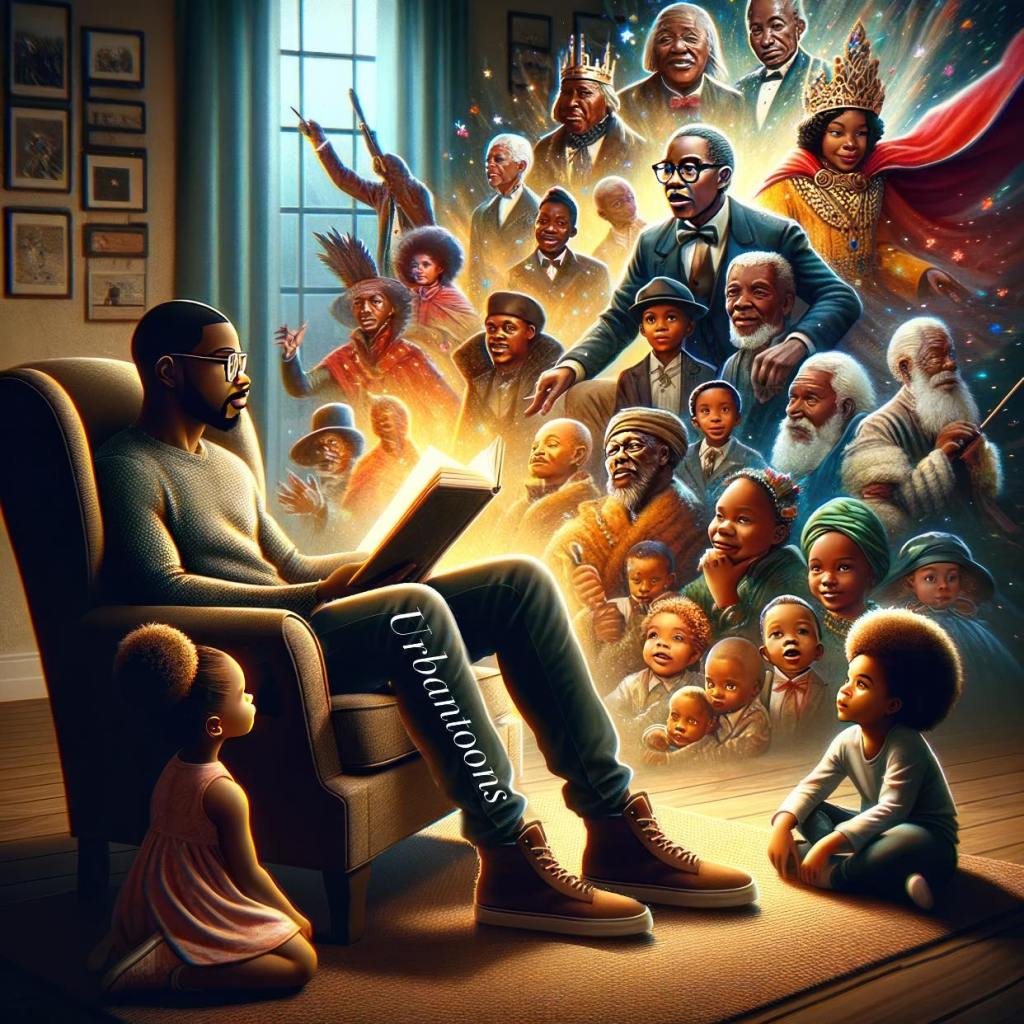
Topic: Rebuilding Black Families and Communities Entry 1
Title: Some questions to consider before embarking on Rebuilding Black Families and Communities Part 2
Video Inspired By: Lessons from Ancient Kemet for rebuilding Black Families
(LINK) https://youtu.be/nOVLIBtRrzQ
In the first entry in this series I asked you, the reader, to define family and community? I didn’t, however, explain why I started with the question, so instead of providing a new question this week, let me fill in that detail. Often, life shows us in stunning detail what we believe; if we pay close enough attention, it’ll even show us why we believe what we believe. Whereas our beliefs may only be understood by closely examining life’s unfolding, why we believe can be easily garnered through close observation of our foundations (usually our childhood, family background and formative years). Life’s greatest mysteries, in fact, can be found and unraveled lodged in this work. Due to its personal and self-serving nature, the “why” expressed in the latter part of that work will attract our attention far more than the “what”; but as maturity hardens into life and the years pass by, the “what” takes on greater urgency as the older one gets the more they can see how the world around them is constructed by their own internal beliefs (this is not to excuse sociological, economic or even political factors). These beliefs could be fed, as they often are, by childhood lessons that no longer hold value or reflect the truth existing around the person, they could be fed by images and messages derived from a media/ entertainment diet that restricts the person’s ability to separate fiction from reality, or it could even be fed by a social circle comprised of people who taint the persons outlook in that area. So is the concept of family and community.
The intimate, interpersonal and [emotionally, psychologically and spiritually] intercoursing nature to family and community render all beliefs about it not only relevant but important beyond modern calculation; though modern sociologists, psychologists and a host of others, have gone a long way in trying to calculate its importance. These attempts have shown us just how fragile the line is between good beliefs, mediocre beliefs and bad beliefs and what some consequences are when either are chosen as a motivation for how a member in the group acts towards other members. Understanding this, and being a word nerd myself; I had a choice to make, how would I encourage you the reader to begin the process of thinking deeply about the subject listed in the topic? I chose, definition, because this is the least utilized belief instrument us as Black folks tap into when trying to conceptualize or even understand our surroundings. Further, Dr. T’Shaka has used definitions throughout his lecture series to ensure the listener and astute student not only appreciates the fundamental premise(s) behind his teachings but also has a foundational brick one can use to build their world view, a topic I’ll definitely be covering at some point in this series. This all stated, I want to return to the previous week’s question but this time I am going to abridge it because in reality I asked two questions and both are equally important. But first let me explain what a definition is as opposed to a description.
A definition captures the essential nature inside the word, it not only speaks to what the word is communicating when said but also what is impresses when thought about in the psyche or the subconscious. This is in stark contrast to a description (which some people confuse with a definition); the description details the etymological origins of the word and why the word impresses and communicates what it does. I hope you enjoyed this entry, please leave your answers to today’s questions in the comment section and if you have any questions leave those too.
What is your definition for family, why? What is your definition for community, why?
 The Dr. Oba T'Shaka Show Archive & More
Leave a comment