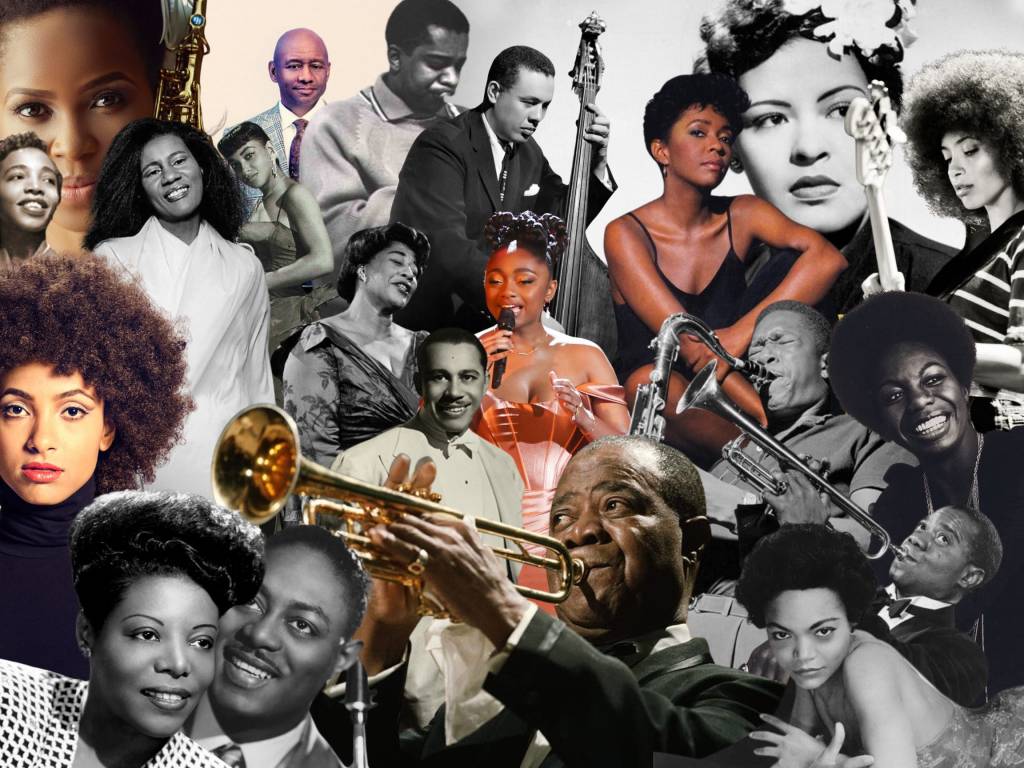
Topic: Those “Muddy Root” Sounds we call Jazz Entry 1
Title: Jazz as a Basis for your Personal Growth in our Culture Part 1
Video Inspired By: The Spirituals are the Blues, a New African cultural expression of African Philosophy
(LINK) https://youtu.be/HxqeF04YpCg
Dr. T’Shaka is not a Hip Hopper, nor is he a hip hop head – but he is a Jazz head, one that takes serious the intellectual and cultural tradition associated with this great tradition. I am not a Jazz head, I began listening to Jazz in 2015, finding its rhythms and harmonies attractive and repelling at the same time. Attractive because they were familiar, my father listened to Jazz often during my formative years; he was born in Louisiana 1939 so Jazz was “in his blood” as he would say, so wasn’t Big Band Music, Cajun cuisine and the need to “cut loose” on a Friday night (a long held tradition of people in the Delta Region). I heard Jazz compositions from my birth in 1982 through my pre-teen years when music our house changed dramatically due to puberty striking my older sister resulting in more angst ridden music being blared from her radio often drowning out my parents contributions to our listening habits. When I received my first radio when I was 12, Jazz music was not my go to musical style (I refuse to call them genres because genres are not traditionally assigned to music, but to paintings) but even if it were there was only one radio station in my area that played Jazz and it wouldn’t be accessible within two years of my receiving my first radio (I know this because I flipped past it for the last time in early 1996 before it disappeared amongst static thereafter). Though I didn’t listen, I always respected Jazz because it was intellectual and cultural, but it wasn’t for me as a pre-teen, teenager, young adult or for a few years, as an adult either.
When I began to listen to Jazz in 2015, I deliberately did so to connect to Black Culture. After studying more intensely Black Culture over the previous 18 months, Jazz became a doorway to a cultural past that books could not draw from within me. My initial reaction to listening to this cultural doorway, was internal repulsion. I distinctly recall feeling annoyed by, what I perceived as, its non-structure. This feeling was then followed by an internal dialogue from where I don’t know, encouraging me to turn off the piece I was listening to, or when I was about to listen to one, to leave it alone all together. This soon gave way to an anger over my not giving in to the drug like addiction to Urban Pop Music and Alternative Rock Music I had been listening to over the previous few years. These three feelings shifted back and forth for about three months before passing away from me, it was then that I started to desire to listen to Jazz Music, but not just listen to Jazz Music but to listen to it while I was studying Black Culture or when I was just chilling around my apartment or when I was meditating. This led me to want to discover more Afrikan styled music, most specifically tribal music which I discovered heavily influenced Jazz in the 1960s and 70s.
As my love for Jazz increased, so did my desire to know more about my Black and Afrikan Cultures; as I wanted to know more about my Black and Afrikan Cultures, I wanted to tap into the latent Afrikan wisdom within myself. In 2015, after months of unfolding myself to the spiritual rhythms in Jazz and Afrikan tribal music, something struck me – Black communities did not have enough money to have robust Jazz programs in their schools but white communities did, seeing the effect it had on my, I understood why. Jazz touched my spiritual self; when I first started listening to Dr. T’Shaka, his mentioning of the Masterwork “Thinking in Jazz” by Paul F. Berliner caught me by surprise. I did not know anyone had written about the intellectual structure in Jazz, though the topic was certainly worth exploring, I figured such information was probably too academic to publish publicly. Unfortunately I have not read the book yet, but I have read parts in it and from what I’ve read and head spoken about by Dr. T’Shaka; the mystical aspect developed and carried through Jazz’s creative process is desperately needed to transform today’s Urban Pop music back into its native forms, including Hip Hop, true R&B, true Soul and true Rock ‘n Roll, all created by our Black foreparents.
 The Dr. Oba T'Shaka Show Archive & More
Leave a comment